
Now hiring
Postdoctoral Researcher
Event and Neuromorphic Vision for High-Speed Aerial Robots
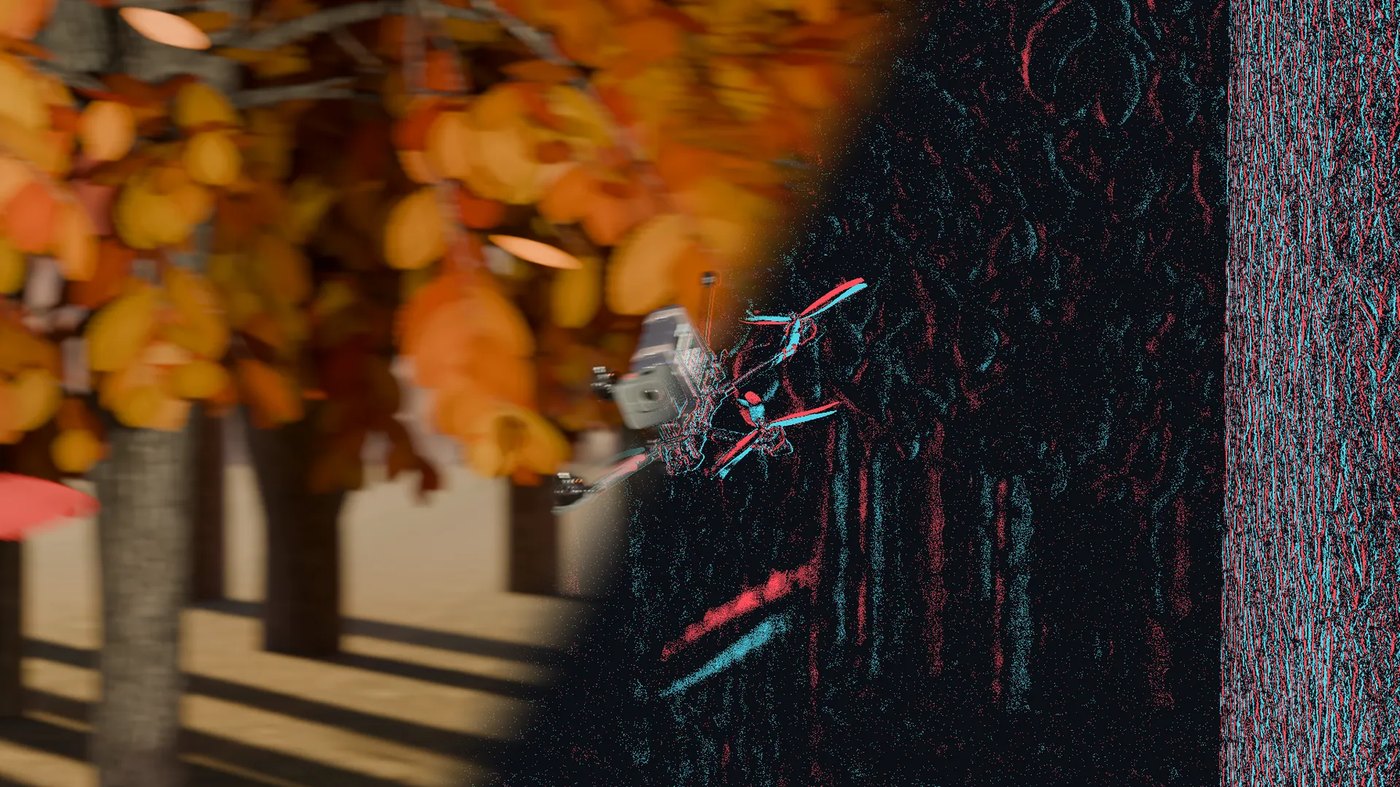
The PRAISe Lab at the University of Colorado Boulder is hiring a postdoctoral researcher to push our research on high-speed perception with event cameras: detecting, tracking, and reacting to fast-moving objects at sub-10 ms latency on resource-constrained robots such as drones.
This is the regime where compute budgets are milliwatts, mass budgets are grams, and frame-based pipelines are too slow, too power-hungry, or blind under high dynamic range.
The role spans the full stack
- Algorithms. Event-based detection, tracking, and optical flow, evaluated against strong frame-based and event-based baselines at matched latency and compute.
- Embedded deployment. Event pipelines and networks on microcontroller-class NPUs, spiking and neuromorphic processors, and small SoCs, not just desktop GPUs.
- Closed-loop flight (secondary role). Event sensors on everything from 50 g micro-quads to mid-size multirotors, flown on evasion and interception tasks in our motion-capture arena.
Looking for
- A Ph.D. in robotics, computer science, electrical or electronic engineering, aerospace, mechanical engineering or a related field, with publications in event-based vision, high-speed motion tracking, optical flow, or real-time robot perception.
- Strong C++ and Python, and comfort with embedded and real-time code.
- A plus: UAV deployment experience, or work with spiking neural networks and neuromorphic hardware.