Bio-Inspired Robots Redefine Autonomy and Sustainability
March 2025
CU Boulder Mechanical Engineering
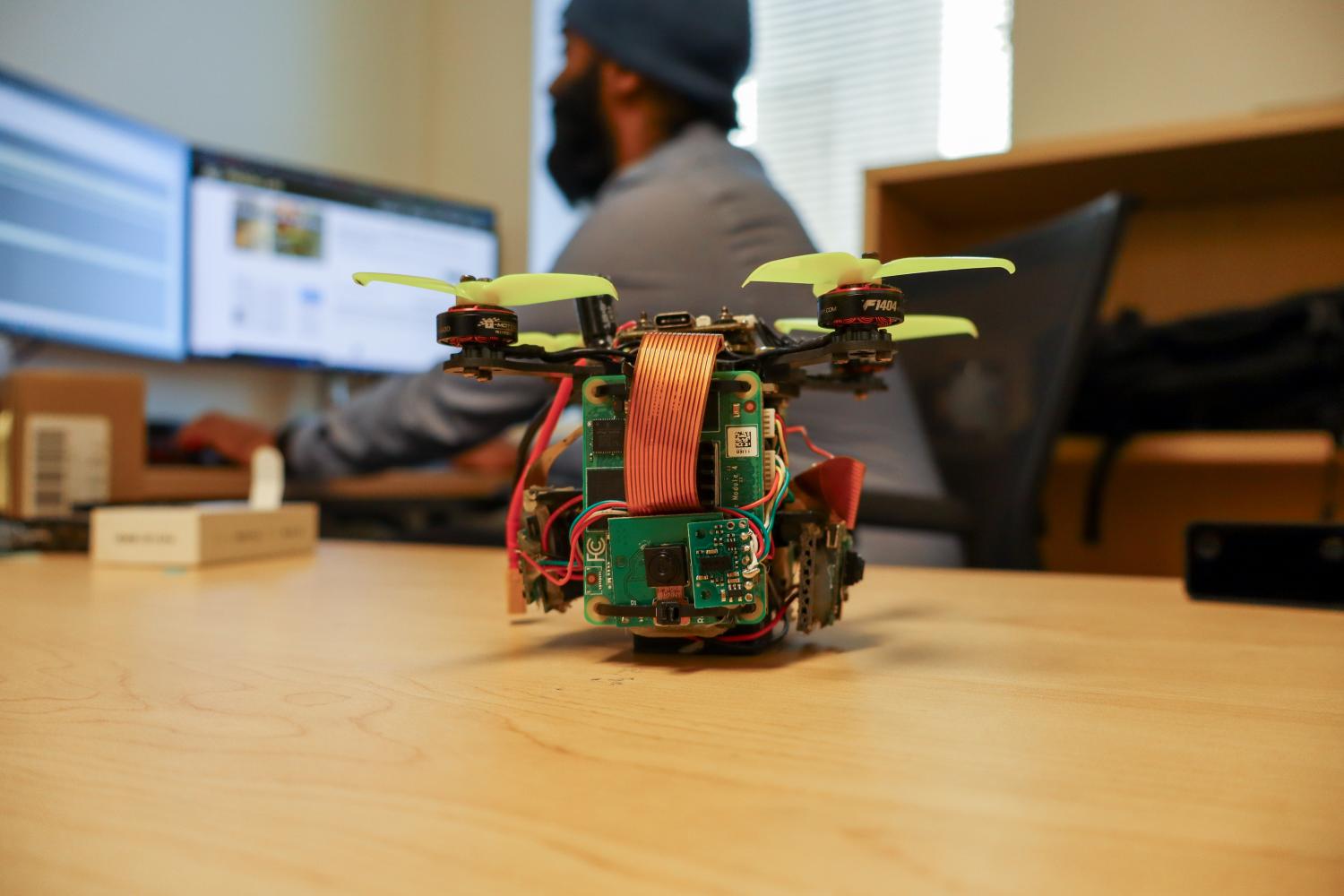
Robotic bees? These bio-inspired robots from the PRAISe Lab redefine the boundaries of autonomy and sustainability.
PRAISe in the News
Media coverage, invited talks, seminars, and public presentations featuring PRAISe research.
In the News
March 2025
CU Boulder Mechanical Engineering
Robotic bees? These bio-inspired robots from the PRAISe Lab redefine the boundaries of autonomy and sustainability.
July 2024
Maryland Today
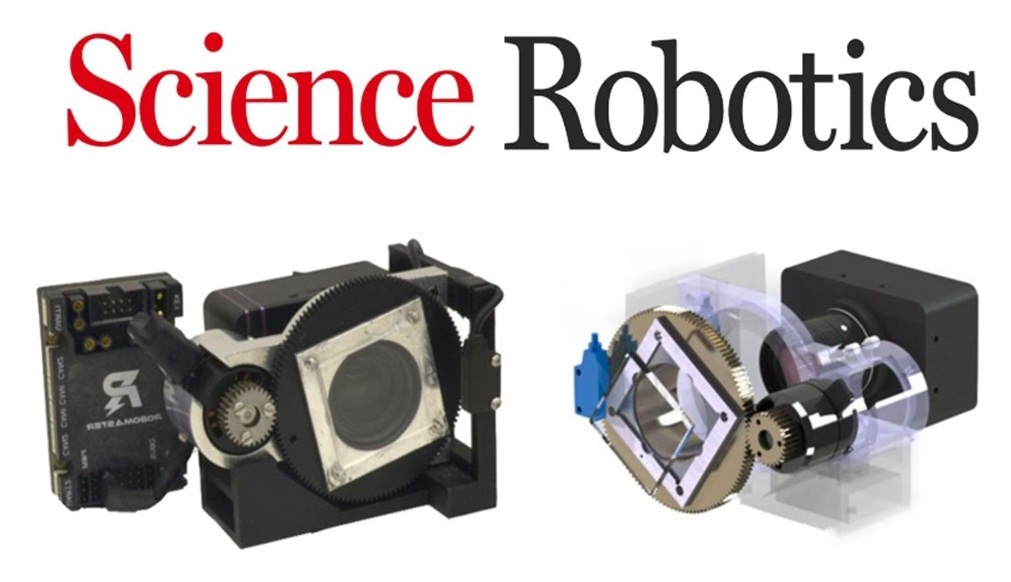
A team led by University of Maryland computer scientists invented a camera mechanism that improves how robots see and react to the world around them.
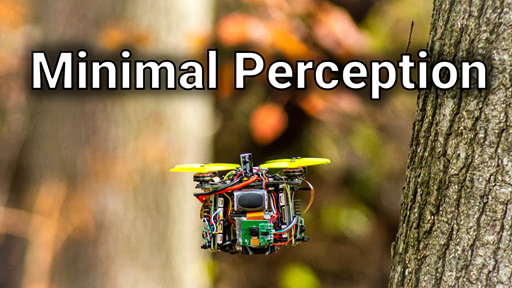
May 2024
UMD Computer Science
Singh is developing a framework for enhanced autonomy in tiny robots inspired by the efficient perception systems of small animals.
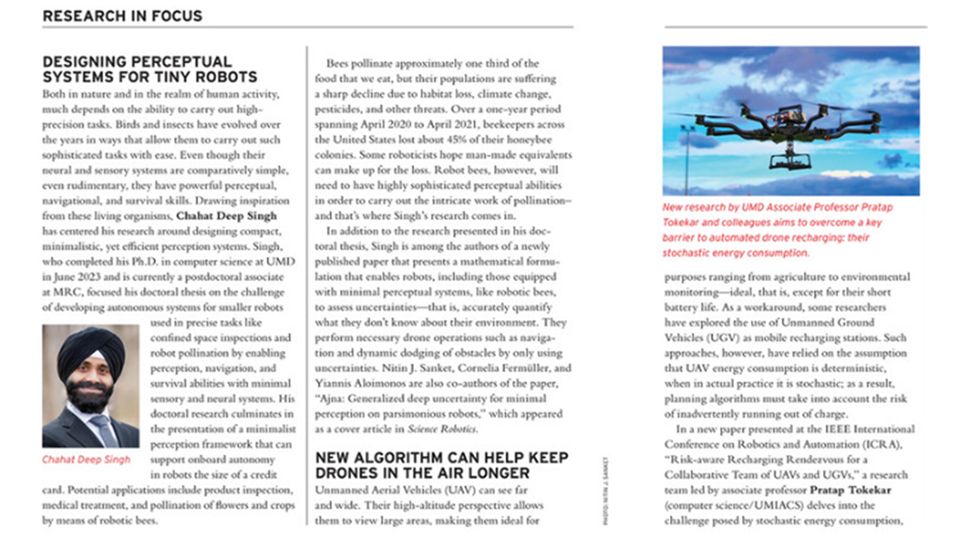
December 2023
UMD Robotics
Drawing inpiration from these living organisms, Chahat Deep Singh has centered his research around designing compact, minimalistic, yet effective perception systems.
August 2023
Science Robotics Cover
Estimating Uncertainty — A Deep Learning Framework for Estimating Uncertainty in Optical Flow for Real-Time Control of Robots. Utilizing only uncertainty in optical flow obtained from a monocular RGB camera enables real-time performance on resource-constrained robots.
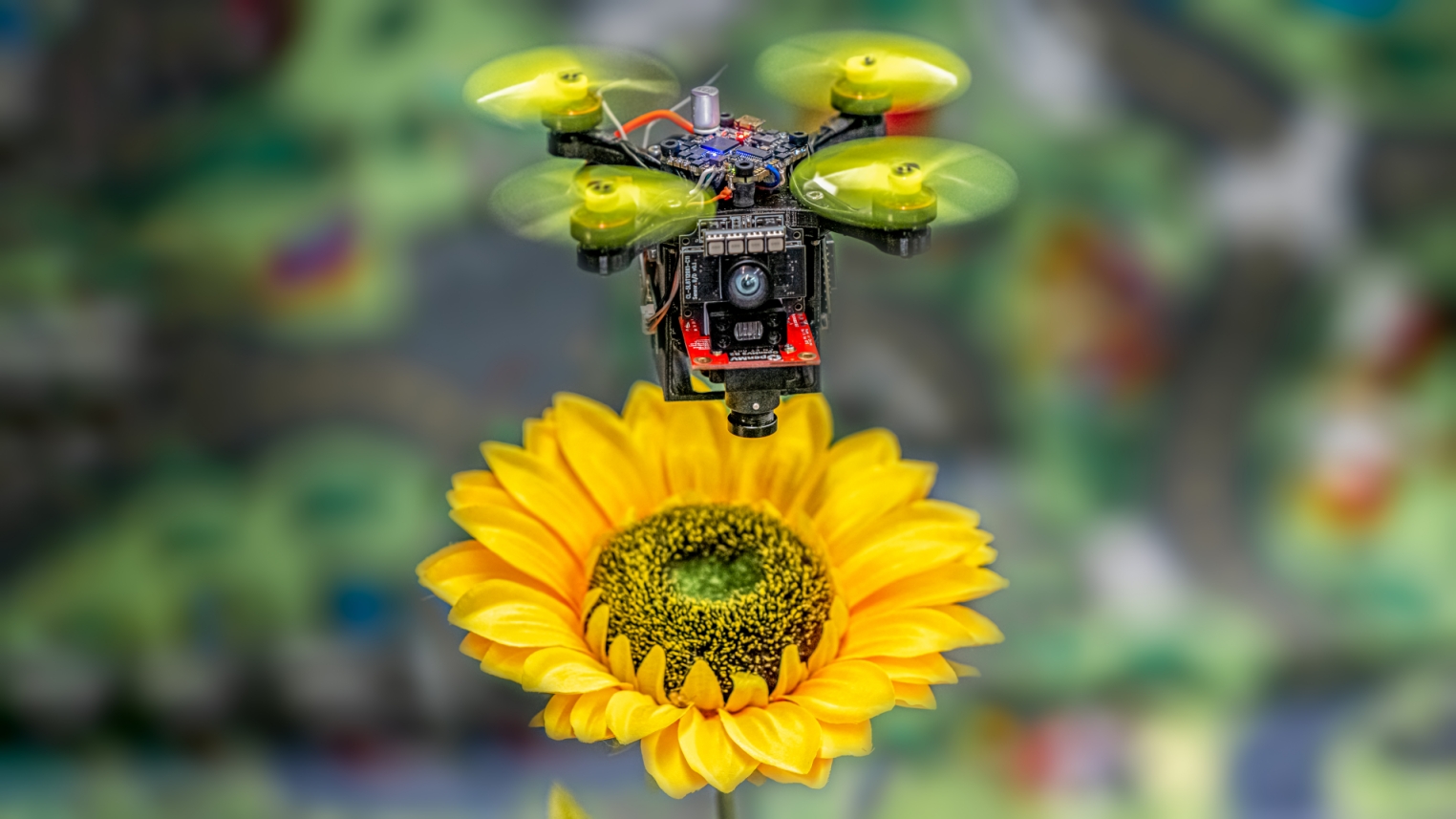
April 2023
BBC Earth
It sounds like a sci-fi dystopia, swarms of robot bees flying around our previously quaint countrysides. But could they actually be part of the solution and help to revolutionise farming?
February 2021
Crowd Supply
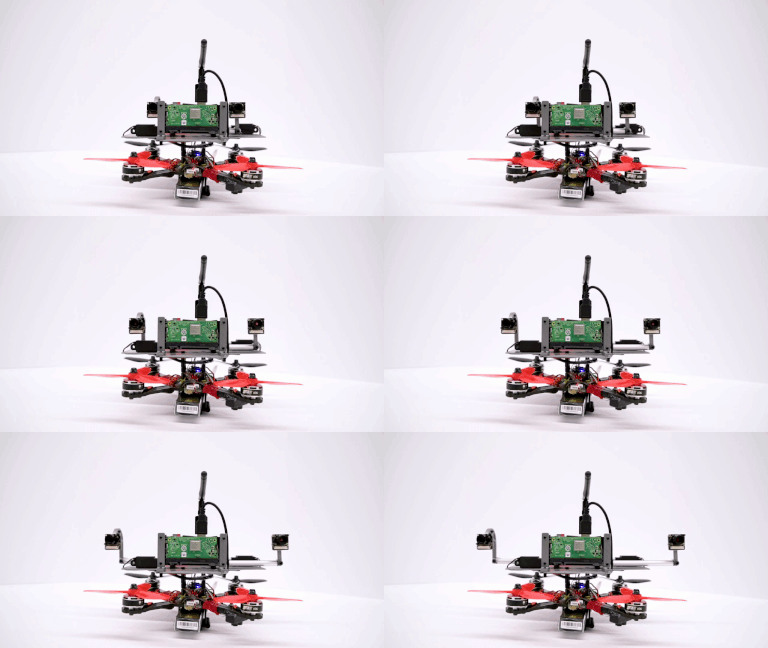
The team showcases three different applications of this system for quadrotor navigation: flying through a forest, flying through an unknown static or dynamic gap, and accurate 3D pose detection of an independently moving object.
June 2019
Mashable / Futurism
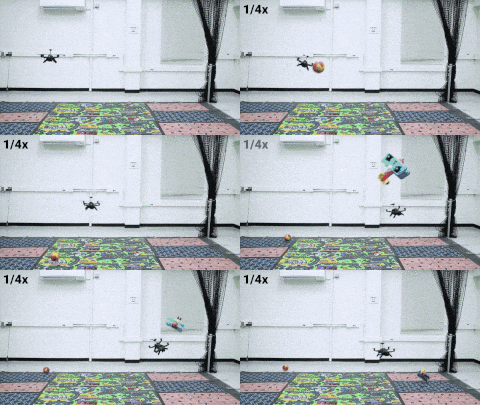
Researchers at the University of Maryland and the University of Zurich equipped a drone with event cameras and a sonar system to make it capable of detecting and dodging objects thrown at it.
September 2018
IEEE Spectrum / NVIDIA
Researchers at the University of Maryland are adapting the techniques used by birds and bugs to teach drones how to fly through small holes at high speeds.
Presentations
September 10, 2024
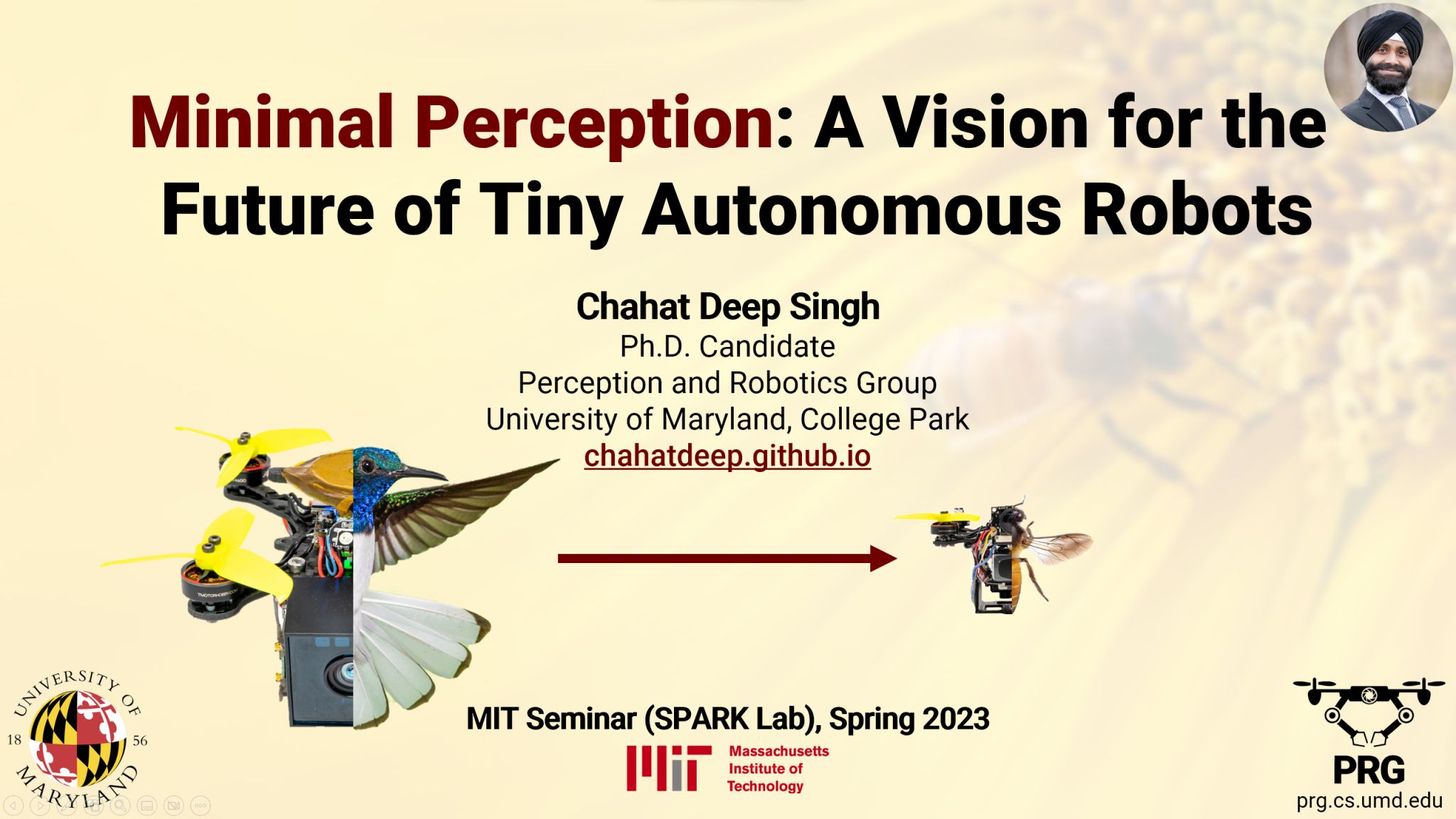
Minimal Perception: Towards the Future of Tiny Autonomous Robots
Chahat Deep Singh